
Exterior Cleaning Checklist: Spring vs Autumn Maintenance for West Sussex Homes
West Sussex exteriors take a beating from damp winters, leaf fall, and shaded areas, which is why algae, moss and blocked gutters are so common. Your best routine is simple: clear gutters in spring and autumn, tackle green growth on patios and driveways early, and do ground-level roof checks before problems spread into gutters and drainage.
West Sussex conditions that make exteriors dirty faster
If you’re in the coastal strip (Worthing, Lancing, Shoreham) or near the Downs and wooded areas (Angmering, Storrington, Pulborough), you’ll typically see faster build-up because:
Shaded/north-facing surfaces stay damp longer
Leaf fall feeds organic build-up in joints and gutters
Wind-driven rain and long wet spells keep surfaces from drying out
This affects almost every property type locally, bungalows with large roof areas, 1930s semis with block paving drives, Victorian terraces with tight drainage runs, and rendered homes that show green staining quickly.
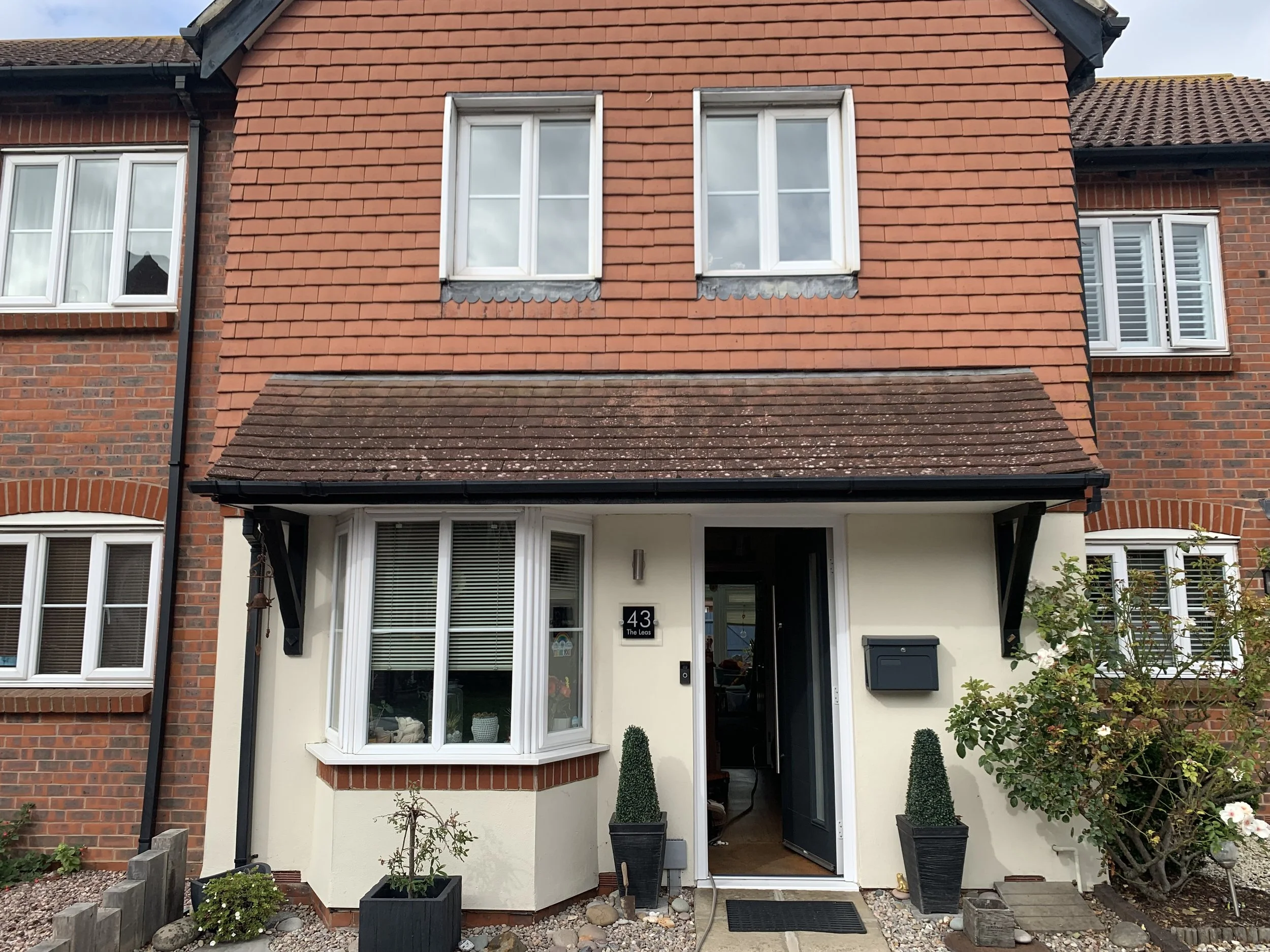
Top priorities (save this section)
Spring priorities (reset after winter)
Clear gutters and downpipes
Remove green algae build-up from patios/steps (slip risk)
Clean driveway joints before weeds/moss establish
Ground-level roof check for moss shedding into gutters
Address overflow staining on walls/fascias (clues to drainage issues)
Autumn priorities (prepare for storms + leaf fall)
Clear gutters again before heavy rain
Storm-proof drainage (downpipes running freely)
Reduce slip risk on patios/paths before winter
Trim back overhanging branches where possible
Avoid roof pressure washing and instead use surface-appropriate methods if moss is heavy
Spring checklist (reset after winter)
1) Gutters and drainage (highest ROI)
Most homeowner guidance recommends cleaning gutters at least twice a year, typically spring and autumn.
Do this in spring:
Clear gutters and downpipes after winter debris
Check for overflow staining on walls and fascia boards
Make sure downpipes are running freely (no slow drainage or backing up)
Signs to look for:
Staining down exterior walls
Drips during rain or water “sheeting” over the gutter edge
Plants/weeds in gutters
Pooling near the base of walls
2) Patios, steps and paths (slip risk)
Winter green build-up (algae/mould-like film) is common in shaded corners and areas that stay damp.
Do this in spring:
Clean green build-up early, especially on steps and entrance paths
Sweep joints and edges to remove organic debris
Spot-treat stubborn patches rather than blasting everything
Signs to look for:
Slippery feel underfoot
Dark or green patches in shade
Growth returning quickly in the same corners
3) Driveways (protect the joints)
Block paving and textured surfaces hold dirt and moisture, perfect for weeds/moss if left.
Do this in spring:
Remove weeds/moss from joints before it roots deeply
Consider re-sanding block paving after cleaning if needed
Focus on north-facing or shaded sections first (they regrow fastest)
Signs to look for:
Weeds returning quickly in joints
Sand loss / gaps between blocks
Slippery green film in shaded strips
4) Roof (visual checks only unless trained)
NFRC notes moss on roof tiles is rarely a problem and typically only needs removing if it’s blocking gutters, outlets or drainage points.
Do this in spring (from the ground):
Look for moss build-up in valleys and along the lower roof edge
Check whether moss is shedding into gutters after rain
If gutters are clogging repeatedly, roof moss may be contributing
Important: It’s not recommended to remove moss by pressure washing because it can force water into the roof space, especially if sprayed upward from ground level.
Autumn checklist (prepare for storms + leaf fall)
1) Gutters (do this before the heavy rain)
Autumn is the “blockage season” because leaf fall and storm debris arrive quickly.
Do this in autumn:
Clear gutters and check downpipes again
Remove roof moss debris from gutters if present
Consider quick visual checks after windy days
Eurocell also recommends spring/autumn cleaning and emphasises debris-related risk.
2) Patios and steps (reduce winter slip risk)
Do this in autumn:
Remove algae before winter to reduce slips
Store pots/furniture so they don’t trap moisture against paving
Keep corners and edges debris-free (they stay wet longest)
3) Walls / brickwork (avoid DIY damage)
Overflow from gutters often shows up as staining on walls and fascias. If you’re cleaning yourself:
Avoid aggressive pressure near older mortar/pointing
Treat the cause (drainage) not just the stain
Clue: if staining returns after every wet spell, the gutter/downpipe issue likely isn’t solved.
4) Roof (don’t “blast it”)
If you’re seeing heavy moss build-up:
Trim back overhanging branches where possible
Avoid roof pressure washing; use surface-appropriate methods
NFRC explicitly states pressure washing moss off roofs is not recommended due to water ingress risk.
The 15-minute “after storms” check (highly recommended)
After a big rain/wind event:
Look for gutters overflowing at corners
Check downpipes are discharging properly
Look for pooling near the base of walls
If you can safely reach it, clear obvious debris at ground level
Eurocell specifically highlights storm checks as a practical step to reduce gutter risk.
DIY vs when to call a pro (UK safety guidance)
DIY is fine for sweeping, light rinsing, and ground-level checks.
For anything involving ladders, roof access, or extended work at height, be cautious. HSE guidance stresses doing as much work as possible from the ground and taking sensible precautions when working at height.
Call a pro when:
You need ladder work above single-storey height
Gutters are overflowing repeatedly
Moss is blocking drainage points
You’re unsure whether pressure washing could damage the surface
We are always help to help, just give us a call or get in touch.
Need driveway or patio cleaning? See our pressure washing service.
Concerned about roof moss? See our roof cleaning service.
Gutters overflowing or blocked? See our gutter cleaning service.
West Sussex property-type checklist
Bungalows (Worthing, Angmering, Storrington)
Why they’re different: Large roof area relative to footprint = more debris capture.
Common issues: gutter blockages, moss shedding into gutters, green patios in shaded back gardens.
Spring focus: gutter cleaning + patio clean (slip risk).
Autumn focus: clear gutters before leaf fall peaks; roof visual check for moss buildup.
1930s semis (Horsham, Lancing, Shoreham area)
Why they’re different: Front paths/drives and older drainage layouts often show issues first.
Common issues: block paving weeds/moss, overflow staining on fascias, slippery steps.
Spring focus: pressure washing for driveway/patio + re-sanding if needed; check downpipes.
Autumn focus: gutter clear + remove algae on steps/paths before winter.
Victorian / Edwardian terraces (older parts of Worthing / coastal towns)
Why they’re different: Narrow access, tight drainage runs, older pointing/mortar.
Common issues: overflow staining, damp-looking wall patches after rain, fragile pointing if DIY pressure washing is too aggressive.
Spring focus: gutter and downpipe flow checks; gentle exterior clean where suitable.
Autumn focus: clear gutters early; avoid DIY high pressure near pointing, consider pressure washing professionally where appropriate.
Rendered homes (common across West Sussex)
Why they’re different: Render shows green staining quickly and stays marked in shaded spots.
Common issues: algae staining on north-facing walls, green film around downpipes and shaded corners.
Spring focus: address green staining early; check gutters/downpipes to stop repeat staining.
Autumn focus: clear gutters to prevent overflow streaks; avoid harsh DIY chemicals on render, ask for advice.
New builds (Crawley edges / newer estates)
Why they’re different: Smaller gardens but high visibility; driveways/patios show staining fast.
Common issues: early algae film on patios, weeds in new block paving joints, staining on paths.
Spring focus: light pressure washing / patio refresh; joint care if block paving.
Autumn focus: keep gutters clear; prevent slippery algae buildup before winter.
Rural / wooded properties (Pulborough, Storrington, near the Downs)
Why they’re different: Trees = leaf fall + shade + organic debris = faster regrowth.
Common issues: frequent gutter blockages, moss shedding, fast-returning green patios/paths.
Spring focus: gutter cleaning + patio clean; roof visual check for moss shedding into gutters.
Autumn focus: repeat gutter clear (often essential); after-storm checks for debris.
Coastal properties (Worthing, Lancing, Shoreham)
Why they’re different: Higher humidity and wind-driven rain can slow drying time.
Common issues: algae/lichen staining on shaded surfaces; roof edges and gutters collect debris.
Spring focus: patio/steps slip risk; tidy drainage runs.
Autumn focus: gutters before storms; roof check for moss buildup and debris shedding.
3-storey townhouses / taller homes
Why they’re different: Access and safety become the deciding factor.
Common issues: hard-to-reach gutters, overflow noticed late, upper-level staining.
Spring focus: professional gutter cleaning (access-safe).
Autumn focus: repeat gutter clear before heavy rain; don’t rely on DIY ladders at height.