
Roof Moss Removal: Air Scraping vs Pressure Washing (What’s Safer for Tiles?)
For most UK roofs, pressure washing is a high-risk way to remove moss growth and organic build-up on clay tiles and slates. A controlled, gentle approach, often air scraping plus appropriate after-treatment—reduces water-ingress risk and supports longer-term longevity. It also supports prevention and ongoing maintenance, which matters more than most homeowners realise in a damp coastal environment with changeable weather.
Verdict: If you’re choosing between the two, air scraping (plus sensible aftercare) is usually the safer choice for tiles than using a pressure washer on a roof.
When is roof moss actually a problem?
Moss can look alarming, but it becomes more than cosmetic when it starts:
blocking gutters, outlets, valleys, or drainage points
shedding into gutters and causing overflow staining
building up in thick mats that hold moisture
Even after removal, moss spores remain in the outdoor environment, so moss regrowth is common, especially on shaded, north-facing roofs or where trees and damp conditions accelerate re-colonisation.
Along the Sussex coast (Worthing–Hove–Brighton), roofs often stay damp for longer due to higher humidity, frequent wind-driven rain, and reduced drying time on shaded slopes. In that kind of environment, moss spores settle easily and you’ll often see faster buildup of dirt, moss, plus algae and lichen, particularly on north-facing elevations and around trees.
That’s why maintenance matters: a more gentle method (such as air scraping) combined with sensible prevention (clear gutters, manage shade where possible, and use biocides where appropriate) typically improves results and overall longevity compared with blasting the roof using a pressure washer.
Why pressure washing can be risky on roof tiles
Pressure washing looks dramatic on video, but it’s not the same as safe roofing practice.
1) Water can be driven under tiles
A roof isn’t designed to be pressure-washed from the outside. High-pressure water, especially when sprayed upwards—can be forced under tile laps and into vulnerable points.
2) The “more aggressive” the setup, the higher the risk
Many DIY setups make things worse:
A turbo nozzle concentrates the jet and can be far more aggressive than a standard fan spray.
A wire brush (or harsh mechanical scrubbing) can damage tile surfaces and create premature wear.
For most homeowners, the risk isn’t just “will it look clean today?”, it’s whether the method creates hidden damage you only notice later.
3) Foot traffic increases breakage risk
Even a good method can go wrong if it involves unnecessary movement on the roof. Cracked or displaced tiles are a common failure mode when technique and access aren’t controlled.
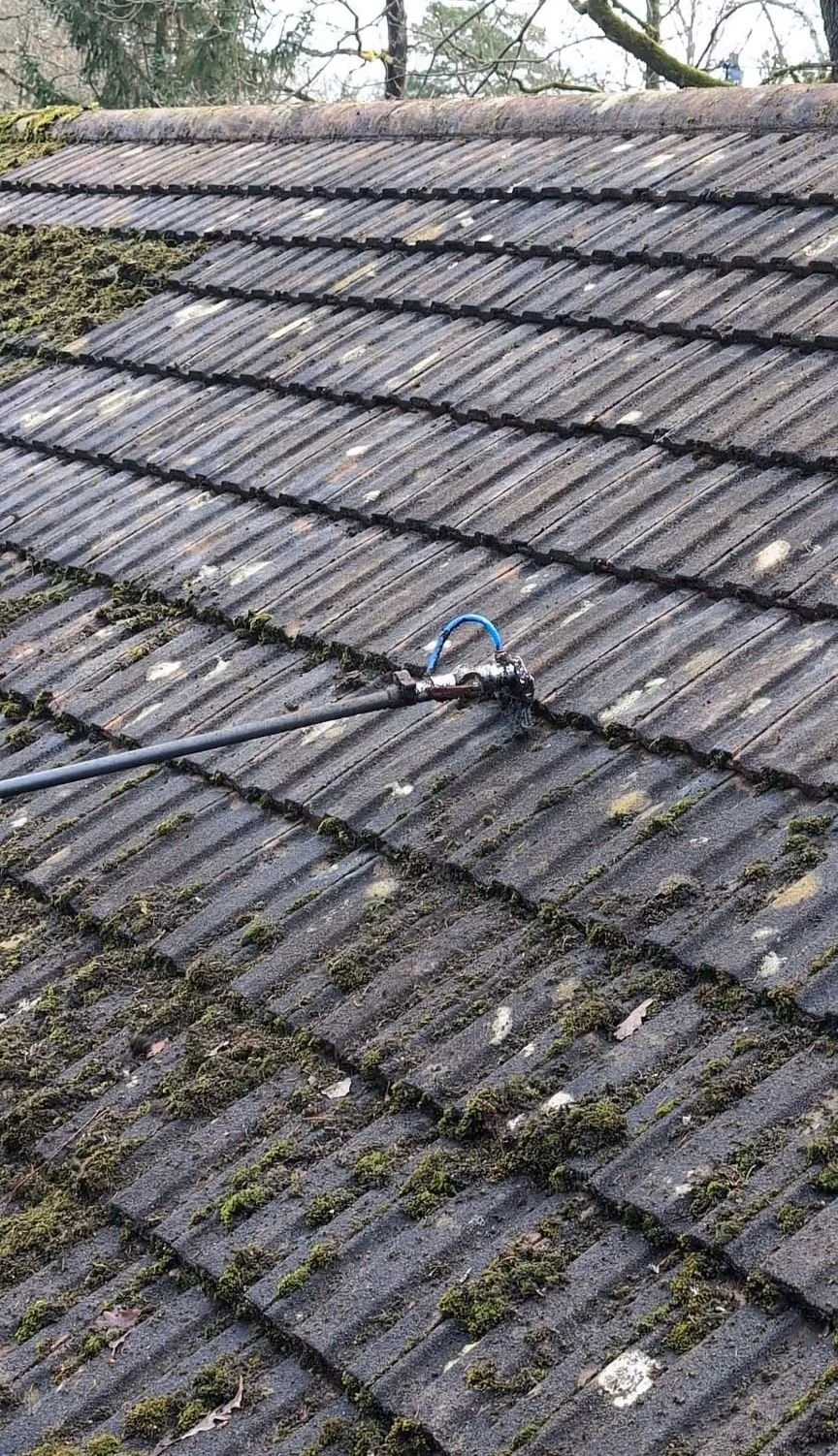
Air scrapers are a dry method of cleaning
What “air scraping” is (and when it’s used)
Air scraping uses controlled compressed air to dislodge moss and organic build-up from tiles without relying on aggressive water pressure. It’s often chosen when:
moss is heavy and needs physical removal
you want a more gentle, surface-appropriate approach
you want better efficiency and control over debris rather than blasting everything with water
It still requires judgement: roof type (tiles vs slates), tile condition, access, and debris management all matter. This is where experienced roofers or roof cleaning specialists stand apart, method selection is based on the roofing materials, not a one-size-fits-all tool.
Roof cleaning methods (quick comparison)
Different roofs call for different roof cleaning methods to be truly effective. A reputable contractor should explain which method is appropriate and why.
Air scraping: controlled moss removal without relying on high-pressure water
Biocides (after-treatment): helps reduce remaining organic growth and slow regrowth
Low-pressure rinsing (where appropriate): sometimes used for surface grime, but should be controlled
Steam cleaning: used by some specialists on certain roof types, but not appropriate for every roof and still requires careful technique and runoff control
Why after-treatment matters (and what it does)
Moss removal addresses what you can see. Regrowth is driven by shade, moisture, and micro-organisms left behind (including algae, lichen, and spores).
That’s why many roof cleans include an after-treatment (often biocides) designed to slow moss regrowth. Treatments need to be handled responsibly, especially with plant protection and runoff control.
What you should expect from a professional roof clean (cleaning process)
A professional cleaning process should look something like this:
Inspection – roof type, condition, access, risk areas
Protection – debris control and safeguarding surrounding areas
Moss removal – e.g., air scraping where appropriate
Clear-up – debris removed, gutters checked/cleared if needed
Aftercare advice – treatment options, realistic expectations, and maintenance guidance
Cost, efficiency, and longevity: why method choice matters
The cheapest approach isn’t always the lowest cost in the long run. A method that damages tile surfaces, dislodges components, or drives water where it shouldn’t can create avoidable follow-on repairs.
A safer, surface-appropriate method (even if it takes longer) usually improves outcome longevity and reduces the chance of repeat callouts, so the overall efficiency is better when you measure it across years, not hours.
For roof cleaning and moss removal in West Sussex & Surrey, see our roof cleaning and moss removal service and request a free quote.
If moss is shedding into gutters or you’ve had overflow staining, pairing roof work with gutter clearing can improve results and prevention.
Roof moss FAQs
Can I just use a pressure washer on the roof?
Most roofs aren’t suitable for high-pressure washing. A pressure washer (especially with a turbo nozzle) can force water under tiles and increase the risk of damage.
Is a wire brush a good idea for moss?
A wire brush can scratch or damage surfaces. It’s usually better to use controlled, surface-appropriate methods rather than aggressive abrasion. Plus there is a safety aspect, as you have to be physically up there scrubbing. Pole based equipment means ground level work rather than a ladder.
Why does moss come back so quickly?
Because moss spores are everywhere outdoors, and your local weather and roof conditions (shade, moisture, airflow) determine how quickly moss regrowth happens. After-treatments (e.g., biocides) and sensible maintenance slow it down.